Skip to content
Documentation

AI‑Powered Notes for PT, OT & SLP

Turn documentation into a clear, clinical conversation. The chart‑native AI co‑pilot stays optional, cites the chart context, and helps you finish fast, defensible notes—so teams spend more time with patients and less on screens.
Observed medians (pilot clinics): daily 4:12, progress 6:45, eval 11:30. Results vary by case mix and workflow.
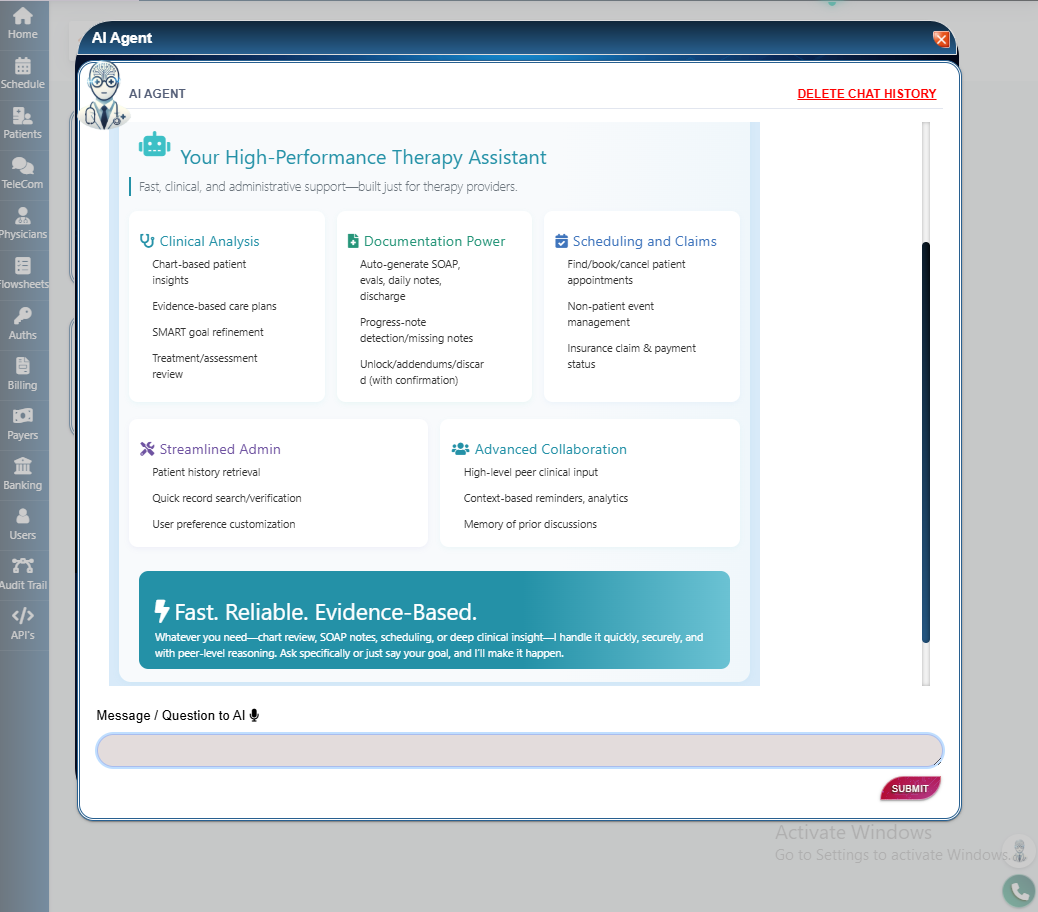
PBS EMR AI‑Powered Notes interface showing scribe, templates, phrases, and flowsheets

Why it feels faster

  • Ambient scribe (optional): capture the session as you work; you approve the summary.
  • Pull‑forward: carry forward relevant goals, risks, precautions, and outcomes—no retyping.
  • PT/OT/SLP templates: discipline‑aware SOAP structure with smart hints and stop criteria.
  • Phrases & shortcuts: your most‑used language, one keystroke away.
  • Chart‑aware suggestions: drafts cite what’s in the record; you accept, edit, or ignore.

AI modes: you stay in control

  • Draft with scribe: record live; the system proposes a SOAP draft with references to today’s chart context.
  • Draft without scribe: type or dictate; quick phrases expand, and the co‑pilot fills predictable sections.
  • Assist, don’t replace: AI suggests CPT/ICD‑10 based on documentation; you confirm coding and medical necessity.
  • Discipline‑aware guardrails: PT/OT/SLP language, inclusion cues, and stop criteria help notes stay clear and reproducible.

Note‑time medians (pilot clinics)

Daily note

4:12

Progress note

6:45

Initial eval

11:30

Medians vary by discipline, payer mix, case complexity, and staffing. Use the ROI calculator with your own numbers.

Flowsheets & outcomes tied to what you did

Interventions and outcomes live together, so progress is defensible and plateaus surface quickly:

  • PT: ROM/MMT, gait/balance/vestibular, functional scales (TUG, 10MWT, 6MWT, LEFS, NDI/ODI, KOOS/HOOS).
  • OT: ADLs/IADLs, bilateral use, cognition/energy budgeting, hand/UE, safety lines and secondary precautions first.
  • SLP: AAC, speech sound/fluency/voice, dysphagia (FOIS/EAT‑10), intelligibility, WPM, MPT, CPIB/PROs.

When notes finalize, flowsheets and HEP update automatically; suggested codes appear for review—no double entry.

Compliance & privacy

  • Optional by design: you remain the author of record; AI suggestions are assistive, not authoritative.
  • HIPAA‑conscious: PHI is protected by our security program; we support a Business Associate Agreement (BAA).
  • Audit‑aware phrasing: drafts encourage clear medical necessity and reproducible plans of care.
  • Billing caution: coding suggestions are educational only; always follow payer rules and clinic policy.

Education only; not legal, medical, or billing advice. Your workflows and payer policies determine final documentation and coding.

Methodology (summary)

Medians reflect timed sessions across pilot outpatient therapy clinics using PBS EMR. Tasks included standard daily, progress, and evaluation notes with typical payer mixes. Times exclude long pauses and administrative interruptions. We refresh medians periodically to reflect real‑world use.

Want to review the approach for your clinic? Email us and we’ll share the timing protocol and help you run a quick on‑site sample.

FAQ

Is the AI mandatory?

No. The ambient scribe and all suggestions are optional. You can turn features off or use quick phrases and templates without AI.

Will it work for complex cases?

Yes. Templates and flowsheets adapt by discipline, domain, and precautions; drafts cite chart context so complex care stays clear.

Does it guarantee payment?

No. Eligibility and benefits screens help, but payment depends on the claim and plan terms. Follow payer rules and clinic policy.

Can assistants/technicians document safely?

Delegation‑ready steps with inclusion cues and stop criteria keep tasks consistent and reproducible across teams and locations.